
CBS Logo
nab-ada-immunogenicity-crystalbiosolutions-

ADA and NAb Immunogenicity Testing in Biologics

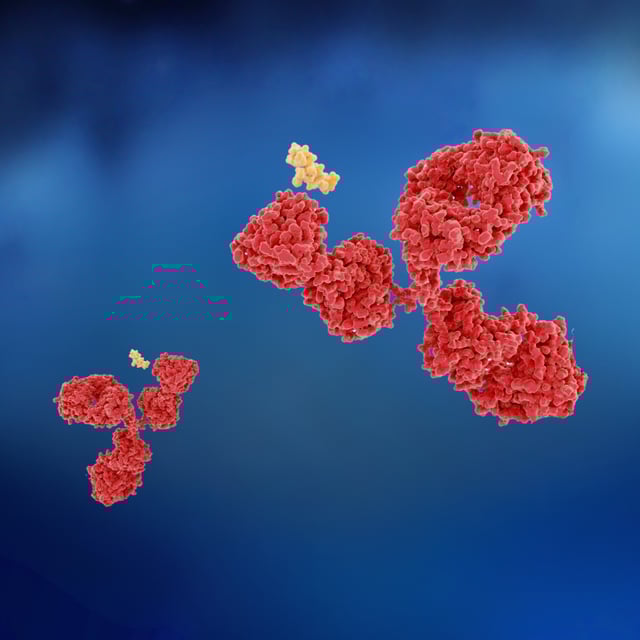
Immunogenicity testing evaluates whether a biologic or protein therapy triggers an immune response. Anti-drug antibodies (ADA) and neutralizing antibodies (NAb) are immune-generated antibodies that recognize the therapeutic molecule. They form when the immune system identifies structural elements of the drug as foreign.

Anti-drug antibodies (ADA) bind to drugs and can alter its clearance or distribution. While neutralizing antibodies (NAb) block the molecule’s biological activity by preventing target engagement or pathway activation. These responses arise due to factors such as aggregation, impurities, formulation stress, structural modifications, or patient-specific immunologic sensitivity. Regulatory authorities state that inadequate ADA and NAb data result in “uninterpretable clinical immunogenicity results”.


Biologics across multiple modalities require structured immunogenicity strategies. These include monoclonal antibodies, bispecifics, ADCs, engineered proteins, peptides, oligonucleotides, mRNA and LNP platforms, AAV gene therapies, and cell-based products.


Immunogenicity in Biologics


New modalities (mAbs, bispecifics, fusion proteins, novel formats) differ widely in immunogenicity risk. However, a 2025 review showed that 40-50% of patients treated with biologics developed moderate to high ADA. These responses often increase clearance, reduce exposure, and in some cases drive loss of response or the need for dose escalation.


Because immunogenicity affects PK, PD, efficacy, and safety, evaluation is required from preclinical stages through post-marketing.


Biophysical and biochemical analytics such as SEC, FTIR, or UV spectroscopy help identify aggregates, impurities, or conformational changes that can explain immunogenicity risk. Additionally, cell-based assays and ligand-binding formats such as ELISA, ECL, MSD, Gyrolab, and multiplex platforms are required to detect binding antibodies, assess neutralization capacity, and quantify functional impact on mechanism-related pathways.


Binding vs Neutralizing Antibodies


Binding ADA Bind to the therapeutic molecule and may influence clearance or distribution.


Neutralizing ADA (NAb) Block the mechanism of action. Evaluated with cell-based assays or competitive ligand-binding assays.


Regulatory agencies highlight that neutralizing assays must demonstrate sensitivity, drug tolerance, and reproducibility. Supporting analytics such as potency assays, reporter gene systems, or pathway-linked assays help confirm biological relevance as they show whether the detected antibodies actually interfere with downstream function, signaling, or target engagement.


Stages of Immunogenicity Assessment


Immunogenicity evaluation follows a structured, tiered approach designed to detect anti-drug antibodies and determine their clinical relevance. Each tier answers a different scientific question and feeds into PK and PD interpretation.


1. Screening Assay


The goal is to identify any sample that may contain antibodies binding to the therapeutic. Key characteristics:


  • High sensitivity

  • Broad detection capability

  • Low risk of false negatives


Screening assays are intentionally inclusive. Any sample that produces a signal above the statistically derived cut-point is considered “potential ADA positive” and moves forward. These assays typically use ligand-binding formats such as bridging ELISA or ECL.


2. Confirmatory Specificity Assay


This stage verifies that the binding signal observed in the screening assay is specific to the therapeutic molecule and not caused by matrix interference or non-specific binding. Mechanism:


  • Samples are re-tested in the presence of excess drug

  • True ADA responses are inhibited by the added drug

  • Non-specific signals are not inhibited


The confirmatory stage ensures that only genuine immune responses progress to titer or neutralization analysis. Proper specificity testing is required by FDA and EMA guidelines.


3. Titer and Neutralizing Antibody Assessment


If ADA are confirmed, additional testing evaluates magnitude and functional impact.


Titer testing determines how much antibody is present by serially diluting the sample until the signal falls below the cut-point. Higher titers usually correlate with stronger or more persistent immune responses.


Neutralizing antibody (NAb) assays measure whether ADAs prevent therapeutic from engaging its target or performing its biological function. Two main formats exist:


  • Cell-based assays that capture pathway inhibition

  • Competitive ligand-binding assays that measure target blockade


NAb results are often the strongest predictor of clinical consequences because they directly affect mechanism of action.


Integration of PK, PD and Clinical Biomarkers


Interpreting ADA and NAb data requires understanding how they change drug exposure and biological activity.


Parallel PK assessments:


  • Detect changes in clearance, half-life, or trough levels

  • Identify exposure drops associated with ADA positivity

  • Affected patients may show low or undetectable drug concentrations even at standard dosing


Parallel PD and biomarker assessments:


  • Capture changes in downstream pathways

  • Include receptor occupancy, cytokine levels, or pharmacodynamic markers

  • Provide evidence of reduced drug activity when ADA or NAb are present


Quantitative Interpretation of NAb assays With Modeling


Advanced modeling tools strengthen interpretation of immunogenicity impact:


Noncompartmental Analysis (NCA):


  • Measures exposure metrics such as Cmax, AUC, accumulation, and linearity

  • Useful for early detection of ADA-related changes in clearance or half-life


Population PK/PD Modeling:


  • Quantifies variability in exposure across patients

  • Identifies covariates such as ADA titer or timing that explain PK differences

  • Distinguishes transient ADA responses from persistent ones


Quantitative Systems Pharmacology (QSP):


  • Incorporates mechanistic biology

  • Links target engagement, pathways, and disease progression to ADA development

  • Useful for understanding long-term effects on efficacy or dosing strategies


These modeling approaches help determine when ADA are clinically meaningful and when they can be managed through dose adjustments, regimen optimization, or patient selection.


Common Issues in NAb Assays and How to Fix Them


Two major reviews, Myler et al., 2021 and Myler et al., 2023, document recurring issues:


  • Low sensitivity

  • Inadequate drug tolerance

  • Incorrect MRD leading to false negatives or suppressed controls

  • Assay drift due to unstable reagents

  • Poor documentation of cut-points and validation


Such issues drive revalidation, reanalysis of stored samples, and delays in early or pivotal studies.


Solutions applied across industry:


Regulatory Expectations and How Programs Meet Them


Regulatory agencies expect a clearly defined ADA and NAb strategy supported by fit-for-purpose assays and full validation of sensitivity, selectivity, drug tolerance, and MRD justification.


Submissions must include ADA incidence summaries linked to PK, PD, efficacy, and safety using validated analytical and clinical datasets.


In 2025, the FDA reported that many Complete Response Letters (CRLs) were driven by analytical and CMC deficiencies that undermined the reliability of immunogenicity and bioanalytical data.


CMC attributes have a strong influence on immunogenicity risk. Aggregation, charge variants, oxidation, glycan drift, sequence variants, excipient instability, and residual impurities can all increase the likelihood or magnitude of ADA responses.


Together, these data show that immunogenicity cannot be evaluated in isolation. CMC attributes shape the structure and stability of the therapeutic, which in turn shapes ADA risk. Strong CMC control supports meaningful ADA and NAb interpretation and reduces the risk of regulatory delays.


Key Takeaways


  • Immunogenicity is common and clinically relevant. ADA incidence can exceed 30 percent for several biologics, and these responses frequently alter clearance, reduce exposure, and drive loss of therapeutic effect.

  • Both ADA and NAb must be evaluated through a tiered, validated strategy. Screening, confirmatory specificity, titer, and functional neutralization assays form the regulatory-standard framework for interpreting clinical relevance.

  • Reliable data require strong analytics across bioanalysis and CMC. Sensitive ligand-binding assays, cell-based NAb formats, advanced biophysical characterization, and quality-controlled reagents are essential to detect ADA accurately and understand their mechanistic impact.

  • CMC quality directly shapes immunogenicity risk. Aggregation, PTMs, glycan drift, impurities, and formulation stability influence ADA formation. Integrating CMC, PK/PD, biomarkers, and modeling enables meaningful ADA interpretation and reduces the likelihood of regulatory delays.


Case Study: A Generic LC-MS/MS Solution for ADC PK Bioanalysis