Antibody-Drug Conjugates (ADC) Development and Mechanisms
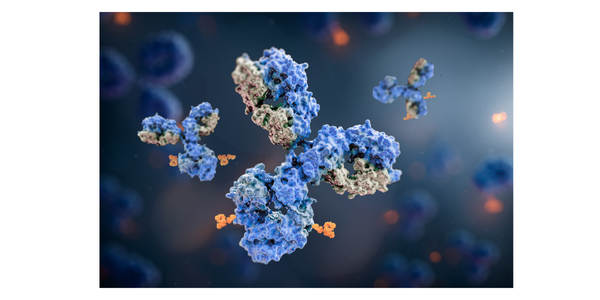
Antibody-drug conjugates (ADCs) combine the high specificity of monoclonal antibodies with the high activity of small-molecule drugs. By leveraging the specific binding of antibodies to target antigens, ADCs deliver cytotoxic payloads directly to tumor cells, which improves targeting and reduces off-target toxicity.
Using the antibody’s specific binding to target antigens, antibody-drug conjugates (ADCs) deliver the payload to tumor cells, killing them. Compared with conventional fully or partially humanized antibodies or antibody fragments, ADCs can release highly active cytotoxins within tumor tissue and therefore have the potential for higher efficacy.
In recent years, ADCs have become a major focus of antibody drug research and development worldwide. As of mid-2025, about 19 ADCs have regulatory approval worldwide. Examples include Pfizer’s Mylotarg and Besponsa, Roche’s Kadcyla and Polivy, AstraZeneca’s Lumoxiti and Enhertu, Seagen/Takeda’s Adcetris and Padcev, Seagen/Genmab’s Tivdak, GSK’s Blenrep, Gilead’s Trodelvy, ADC Therapeutics’ Zynlonta, ImmunoGen’s Elahere, and datopotamab deruxtecan (Datroway) for HR-positive/HER2-negative breast cancer.
In the United States, the FDA has approved roughly 14 ADCs by 2025. Indications span lymphoma, leukemia, breast cancer, multiple myeloma, head and neck cancer, ovarian cancer, urothelial carcinoma, and others.
While in China more than ten ADCs are on the market, including Adcetris, Kadcyla, Besponsa, disitamab vedotin (Aidixi), Trodelvy, Polivy, Enhertu, Padcev, Zynlonta, and others, with rapid growth in NMPA approvals through 2024.
Antibody-Drug Conjugates (ADCs) Structure
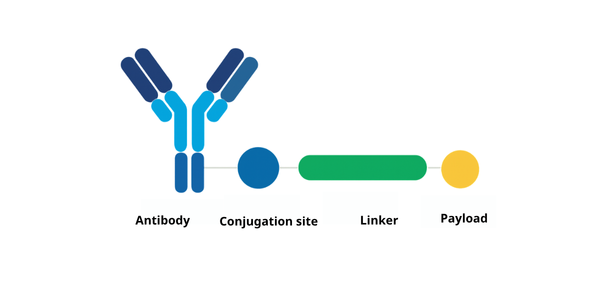
ADCs connect a monoclonal antibody to a small molecule cytotoxic drug through a defined linker. The core components are the antibody, the linker, and the cytotoxic payload.
ADC designs vary widely. Even products directed at the same target can differ in epitope recognition, conjugation site, linker chemistry, and payload class. These differences contribute to distinct safety and efficacy profiles.
An effective ADC should include:
-
Antibody: a well selected target with high expression on tumor cells and low expression on normal tissue, adequate capacity for drug loading, structural stability, internalization capability, favorable PK, minimal nonspecific binding, and low immunogenicity.
-
Conjugation site: typically through lysine or cysteine residues, with options for site-directed engineering.
-
Linker: stable in circulation yet able to release payload inside cells or within the tumor environment.
-
Payload: high potency with a defined mechanism of action and compatible chemistry for conjugation.
Mechanism of Action of ADC
ADCs circulate after systemic administration with properties similar to the parent monoclonal antibody. Target specificity is achieved through antibody binding to a defined antigen on tumor cells. Once bound, the ADC is internalized and transported to lysosomes, where it is degraded and the cytotoxic payload is released. The payload then induces cell death by damaging DNA or inhibiting cell division.
Linkers connect the antibody to the payload. They must remain stable in circulation to minimize off target toxicity and ensure efficient release within target cells. Certain ADCs are intentionally designed to allow extracellular payload release within the tumor microenvironment to support a "bystander killing" effect.
Cleavable linkers frequently enable this effect. Once released, the payload can diffuse into neighboring cells and induce cell death independent of antigen expression. This is particularly advantageous in solid tumors with heterogeneous antigen distribution. It also introduces safety considerations because free payload may diffuse beyond the target site or re enter circulation, increasing the risk of toxicity to normal tissues.
These biological processes shape the exposure, distribution, and release patterns of ADCs. Read here the Strategies for Antibody Drug Conjugates Bioanalysis
Development History
The idea behind ADCs began with Paul Ehrlich’s 1913 concept of a magic bullet. Early attempts in the 1950s attached murine anti leukocyte antibodies to methotrexate for leukemia. Progress increased with humanized antibodies, but challenges remained, including target selection, too much or too little toxicity, and strong immunogenicity.
-
2000: Mylotarg (Pfizer/Wyeth) received FDA approval for leukemia, was withdrawn in 2010 due to hepatotoxicity and limited survival benefit, and reapproved in 2017 with optimized dosing.
-
2011: Adcetris approved.
-
2013: Kadcyla approved.
-
2017: Besponsa approved.
-
2018: Lumoxiti approved.
-
2019–2024: Multiple modern ADCs approved, including Polivy, Trodelvy, Padcev, Tivdak, Zynlonta, Elahere, Enhertu, and Datroway (datopotamab deruxtecan) in 2024 for HR-positive/HER2-negative breast cancer. These milestones reflect maturation of the field and expansion across tumor types.
Generations of ADCs
First generation:
These ADCs used nondegradable linkers and murine antibodies. Their efficacy was limited, targeting was weak, and linkers often broke down in circulation. Murine antibodies triggered immune responses, and the products were highly heterogeneous with variable DAR. This variability caused instability, aggregation, and off target toxicity.
Second generation:
Better antibodies improved targeting, and more potent payloads increased the therapeutic index. Chemistry, Manufacturing, and Controls (CMC) properties also improved. Even with these advances, many ADCs still had narrow safety windows due to off target toxicity, the presence of unconjugated antibody, and high DAR species that tended to aggregate or clear rapidly.
Third generation:
Site specific conjugation allows consistent DAR and more stable products. These ADCs show improved stability and PK, lower toxicity, no unconjugated antibody, slower deconjugation, stronger payload activity, and reliable performance even when antigen levels are low.
Core Technologies for Antibody-Drug Conjugate Development
Each component plays a defined role in how the ADC targets tumor cells, releases its payload, and maintains consistent performance during development and clinical use. Modern ADC development relies on several key technologies that shape safety, stability, and therapeutic activity.
Target antigen selection
Successful ADCs require targets primarily expressed on tumor cells with minimal expression in normal tissues to reduce off-target toxicity. Targets must be present on the cell surface, remain tissue-bound rather than shed into circulation, and internalize upon antibody binding to deliver payload intracellularly. Some newer designs use non internalizing targets and depend on extracellular payload release and a bystander effect.
Antibody selection
The antibody should deliver the payload specifically to tumor cells. Key features include high affinity for the target antigen, long in vivo half life, low immunogenicity, low cross reactivity, and suitable sites for conjugation. Fully human antibodies are increasingly used to reduce immunogenicity. For approved ADCs, IgG1 is the dominant scaffold. It offers longer half-life, stronger FcγR binding, ADCC and CDC activity, and lower propensity to form multimers. IgG4 can undergo Fab-arm exchange that may reduce efficacy through off-target effects.
Linkers
Linkers connect the payload to the antibody and must be stable in circulation yet release the payload after internalization.
-
Non-cleavable linkers (for example thioether or maleimidocaproyl) resist proteolysis and rely on lysosomal degradation of the antibody to release active species, providing low off-target toxicity but limited bystander effect.
-
Cleavable linkers exploit differences between blood and tumor cell interiors, such as acidic pH, lysosomal proteases, or reducing environments. Peptide linkers sensitive to cathepsins, often overexpressed in tumors, are widely used.
Payloads
Cytotoxic payloads must be highly potent, stable in circulation and lysosomes, have small molecular weight, long half-life, low immunogenicity, and functional groups suitable for conjugation while preserving antibody internalization. Common classes include tubulin inhibitors, DNA-damaging agents, and topoisomerase I inhibitors. Tubulin inhibitors such as MMAE are well established. Topoisomerase I inhibitors like DXd are highly active and underpin Enhertu and Datroway.
Conjugation methods
Common approaches include random conjugation to lysines, reduction of interchain disulfides to expose cysteines for conjugation, and engineered site-specific methods. Random conjugation produces mixtures with heterogeneous DAR and variable attachment sites, which can reduce stability. Site specific technologies such as cysteine rebridging, non natural amino acids, glycan conjugation, selective lysine targeting, and enzyme mediated methods create more uniform ADCs with consistent DAR and improved performance.
The Future of Antibody-Drug Conjugates
Advances in antibody engineering, linker chemistry, and payload design continue to expand what ADCs can achieve in oncology. Several emerging approaches aim to improve selectivity, deepen tumor penetration, increase potency, and address the limitations of current platforms. The next generation of ADCs will likely combine multiple innovations in targeting, conjugation, and delivery.
1. Bi-epitope or dual-target ADCs.
Bispecific antibodies can improve internalization and tumor specificity by engaging two antigens or two epitopes on the same target. Examples include dual HER2 epitope designs and HER2 plus LAMP 3 constructs that enhance lysosomal trafficking in preclinical studies.
2. Multivalent conjugation.
Attaching multiple synergistic payloads to a single antibody may strengthen efficacy and allow mixed mechanisms of action. This approach will require advanced conjugation chemistry and a wider set of linker designs.
3. New carrier formats.
Smaller scaffolds such as Fab fragments or peptide based carriers may improve tumor penetration and distribution in solid tumors compared with full length IgG.
4. Non-internalizing ADCs.
Some platforms rely on extracellular payload release within the tumor microenvironment. The released drug can diffuse into cancer cells and overcome penetration barriers, supporting activity even when internalization is limited.
5. New cytotoxic agents.
Next generation payloads such as PBD dimers and other highly potent molecules offer picomolar activity and are progressing through late stage clinical development.
6. Photoimmunotherapy as an ADC-like platform.
Akalux (ASP 1929) uses cetuximab linked to a photoactivatable dye. After light exposure, the system triggers rapid tumor necrosis. It received approval in Japan in 2020 for certain head and neck cancers and represents a complementary approach to traditional ADCs.
Conclusions
-
ADCs unite antibody specificity with potent small molecule payloads, creating a therapeutic class with strong targeting capabilities and growing global adoption across oncology.
-
Their structure, mechanism, and development require mastery of multiple technical areas such as antigen selection, linker chemistry, payload design, conjugation methods, and bioanalytical approaches.
-
Recent regulatory approvals and advances in site specific conjugation, next generation payloads, and novel carrier formats are expanding the potential of ADCs and shaping future innovation in the field.
How a CRO Can Help Antibody-Drug Conjugate Development?